
Dans un contexte d'affaires en évolution rapide, les gestionnaires TI héritent souvent de la lourde responsabilité de réduire les coûts sans compromettre la qualité et l'efficacité des opérations. Avec des pressions budgétaires croissantes et un besoin d'optimiser les ressources plus critique que jamais, prendre les bonnes décisions d'optimisation des coûts peut être intimidant
Cadre de décision pour l'optimisation des coûts
Fondamentalement, l'optimisation des coûts consiste à équilibrer impact, effort et risque. Ce cadre présente six domaines clés à considérer, chacun accompagné d'un système de notation qualitatif et quantitatif.
Comment utiliser le cadre
Étape 1 : commencez par un remue-méninges sur les options possibles de réduction des coûts. Évaluez chaque option à l'aide des questions de chacun des six domaines clés, puis attribuez une note dans l'une des trois colonnes fournies.
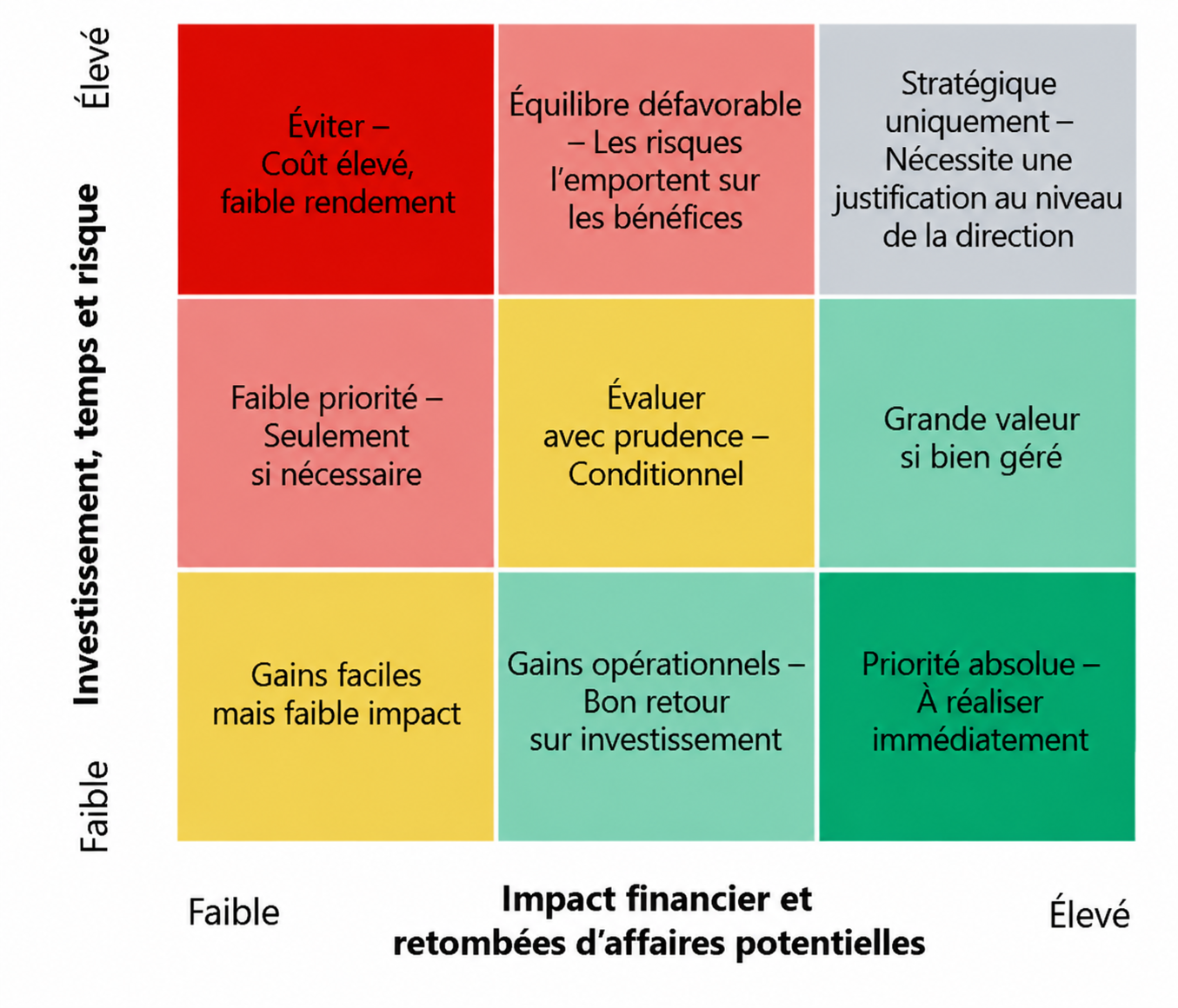
Étape 2 : utilisez le tableau d'évaluation pour noter chaque initiative selon deux dimensions :
1. Investissement, temps et risque
2. Bénéfices financiers potentiels et impact d'affaires
Placez chaque initiative sur le graphique selon vos notes. Une fois positionnée, le cadre révèle la prochaine étape. Les leaders TI voient ainsi rapidement où concentrer leurs ressources et quelles initiatives risquent de ne pas livrer une valeur suffisante pour l'effort exigé.
Piloter une optimisation stratégique des coûts TI
À une époque où la technologie soutient chaque facette de l'entreprise, l'optimisation des coûts ne consiste plus seulement à couper des dépenses. Il s'agit de prendre des décisions stratégiques qui protègent la performance tout en dégageant une valeur à long terme. Grâce à un cadre structuré, les leaders TI peuvent dépasser les compressions réactives et adopter une approche proactive qui allie discipline financière et innovation.



 English
  Français